Curious

I think being a genealogist actually REQUIRES that one be curious. I can think of many fragments of stories I long to know more about. Most especially I wish I’d asked more questions when those who would know the answer were still alive.

When the six of us were helping my mother clean out her house, prior to moving to Assisted Living, each of us were allowed to keep items we were interested in. I, of course, grabbed some pretty random things, sure that they had meaning to our family, even if I didn’t know why. Photo albums were one of those things. And thank goodness, I had them, because they ended up being essential for feeding my curiosity about the things pictured below and the story attached to them.

My mother grew up on an orange ranch planted by her grandparents, Luella May Law Johnson and Charles Roscoe Johnson. The Yorba Linda ranch in Southern California helped to sustain them through depression years, as they were able to trade oranges for goods and services.

Her son Ross Bernard Johnson built a home in 1927, down on the flats next to Ohio Street, one of the first homes in the area to be fully equipped with electrical current throughout. We moved onto the property in 1949 after my grandmother Helen died, and stayed there for several years, first in the apartment over the garage and then in the main house after my grandfather died.

I have many memories of riding around on the tractor in the groves, helping my uncle to feed his rabbits, sitting on the front porch with a new very curly permanented hair-do, and learning to ride my first big bike. Some of my fondest memories were going up the hill with my sister, Judy, to play with Grandma Johnson’s miniature tea set. I loved it there.
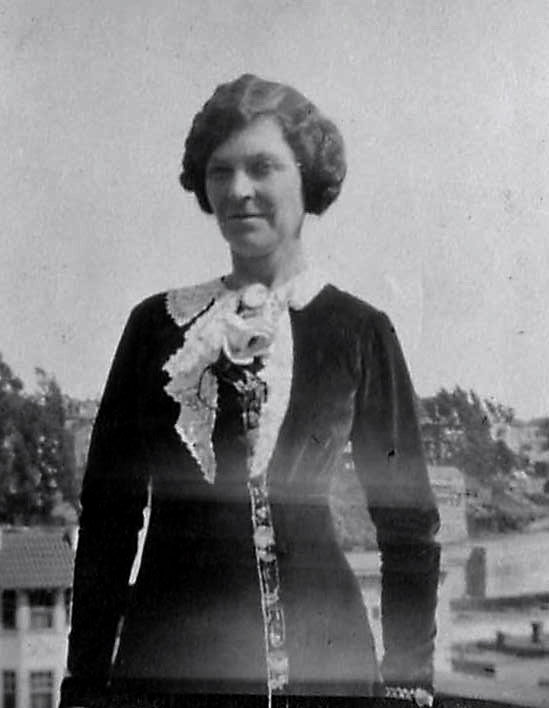
Luella Law Johnsonn
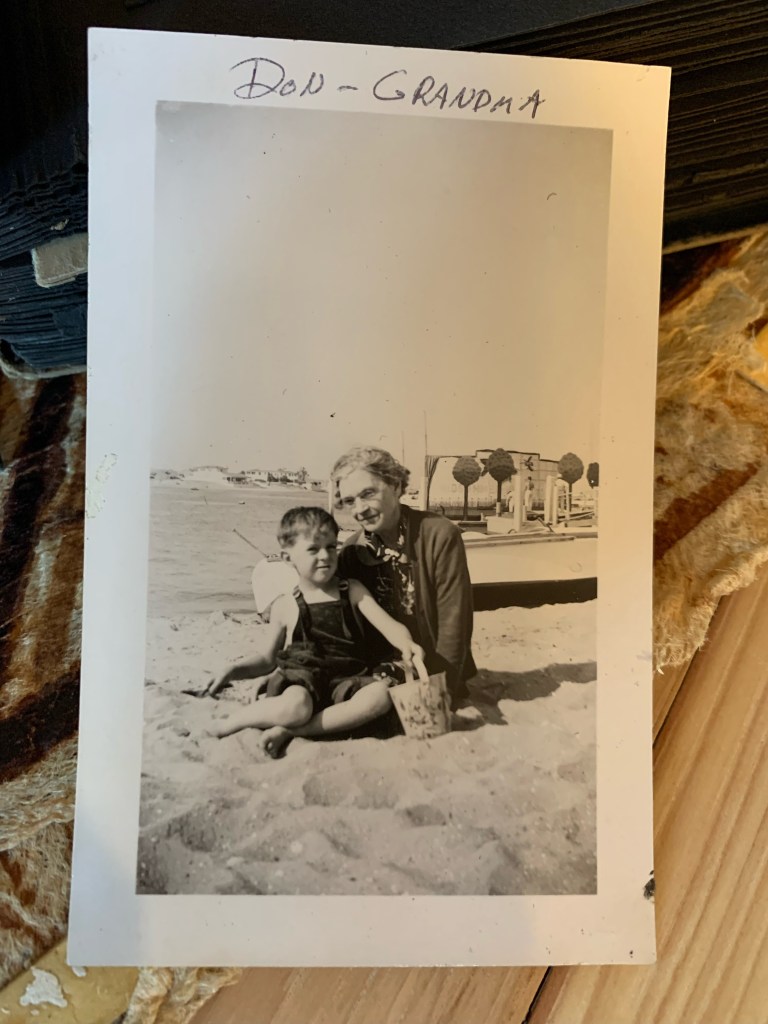
Luella with Grandson Don, my uncle

After her husband died in 1920, Luella continued to live in the house above the orange grove for many years. Luella didn’t stay home, however. She traveled. Sometimes she travelled for the Yorba Linda Chamber of Commerce. Sometimes, she traveled with friends.

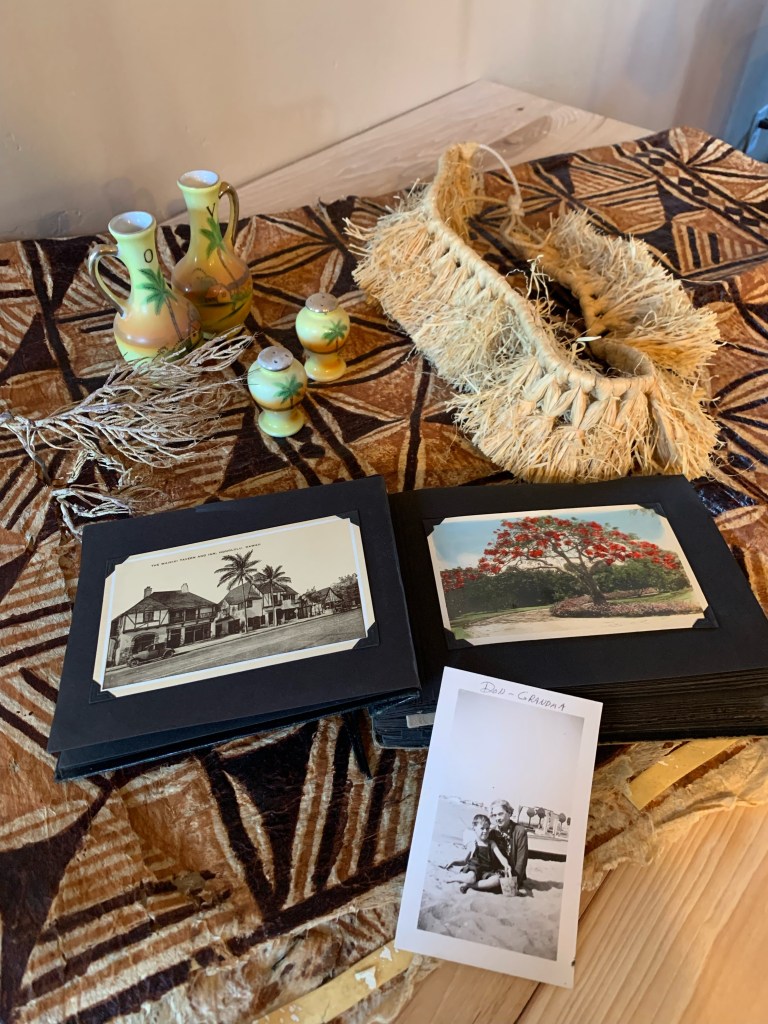
The trip I was curious about must have been significant to her. She filled a small photo album with not only tourist-y photos and postcards (some from 1927), but also pictures of she and her friends learning to surf, sun-bathing on the beach of Waikiki, and having a wonderful time in Honolulu and on the Big Island, where they visited the Kilaueu Volcano. They toured Kauai and took a boat trip to see the leper colony on Molokai.

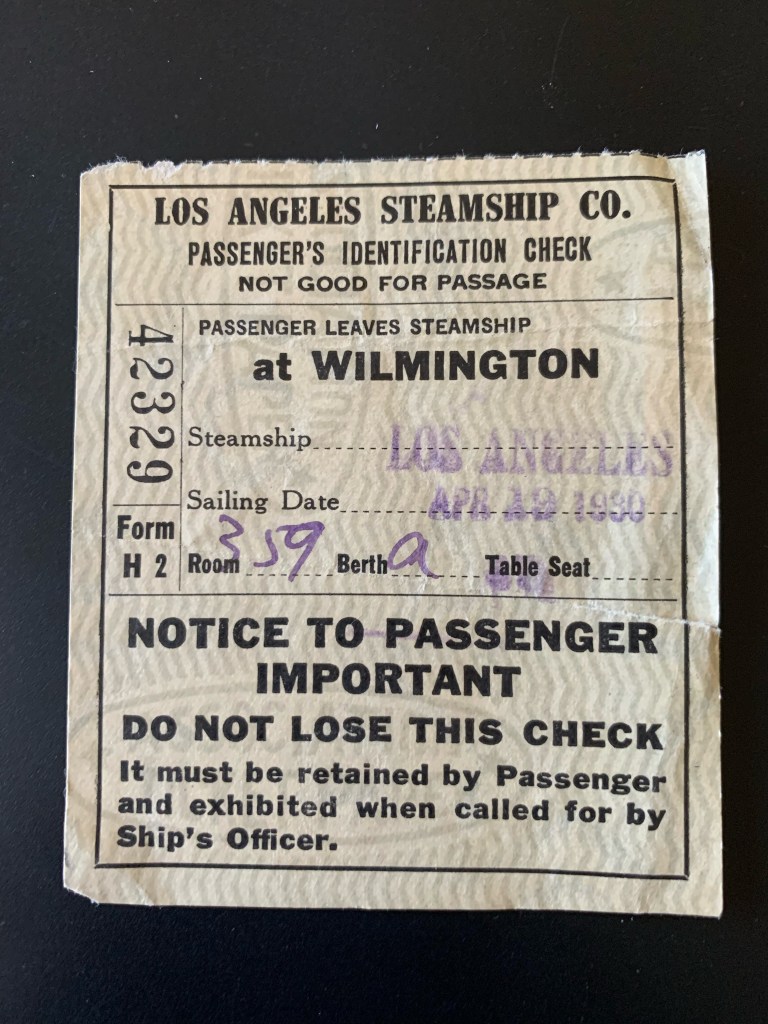
Inside the photo album was also a very small envelope. In it were keepsakes such as more tiny photos, a letter from my mother (then a young girl) telling about her Easter vacation, and a recipe for bean-corn salad. Most interesting was the ticket shown below. I had always believed the album told a story of her travel in the 20’s. Now I know she cruised as a passenger with the Los Angeles Steamship Co. out of Wilmington on April 12, 1930.
My other questions, I may never have the answer to. I want to know the stories behind the objects in the picture below. Were they just tourist shop purchases? Who was the handsome dude (obviously of Hawaiian background) in the album? And on and on…
One last thing. My mother had a copy of a newspaper article written when she returned. She was interviewed about her journey, saying, “Hawaii is a place of contrasts. Snow-capped Mauna Kea looms above, while at the base the warm waters of the Pacific dash against the palm fringed tropic shore. The only sad part of the whole voyage is the leper isle which makes one feel uneasy as the ship glides by the home of those isolated people. That is all they are privileged to see and it reminds me of ‘The Ships that Pass in the Night.” Since Luella became a teacher in 1898, it was fitting that the last paragraph of the interview is about the education and language of the native Hawaiians.

Several of my sisters and brothers love to travel, and just maybe Luella is where we acquired the bug!
Favorite photos

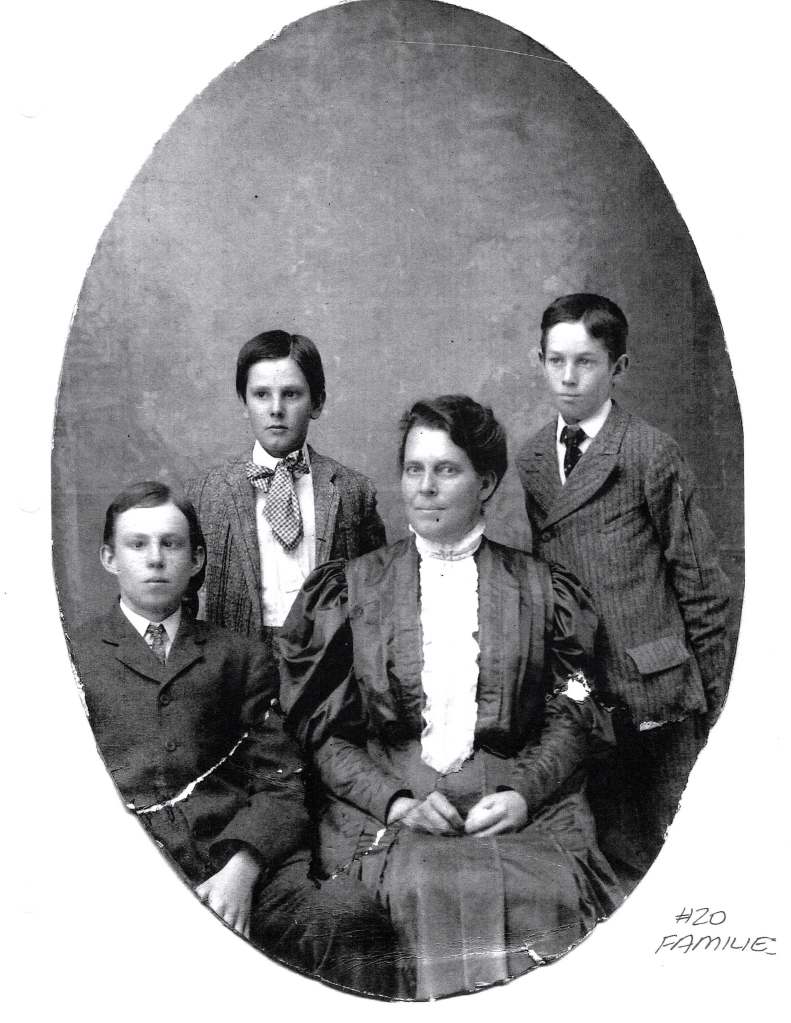
Carrie Earl McFadden Ford with her three sons. (Sons L to R) Herbert Andrew born 27 June 1895, Alvin Leon born 9 Sept 1890, and Maurice Earl (my grandfather) born 14 Jan 1893. Carrie’s Husband Herbert Alvin Ford (pictured in the banner at the top of this page) died 6 June 1895 from Tuberculosis, when she was still pregnant with Herbert Andrew. Becoming a widow at the age of 27, Carrie did not shrink into passive widowhood. “She quickly took control of their ranch and extensive land holdings, establishing herself as a powerful business figure in her own right. during this era, she was the only woman running a ranch in the area.”

One of her many accomplishments was to follow up on a lawsuit filed and won by her husband against an individual who did not deliver on a pre-paid order of orange trees. This man refused to pay the judgement attained against him, so Carrie took her case against him all the way to the California Supreme Court, “establishing the legal right of widows to claims won by their late husbands.” (quotes from Fullerton Heritage, Spring, Volume 17, Number 8, May 11)

My Favorite Find

Week 2 of 52 Ancestors in 52 Weeks

My favorite find isn’t a thing. I don’t remember who discovered who first (probably she found me first since she’s the DNA Ace!). But somehow my find and I connected via a DNA match on Ancestry sometime before December 2018, which is when we first met in person. We had multiple e-conversations and a few phone calls prior to that…maybe Carol Anne Johnston Snow will remember exactly when we connected.

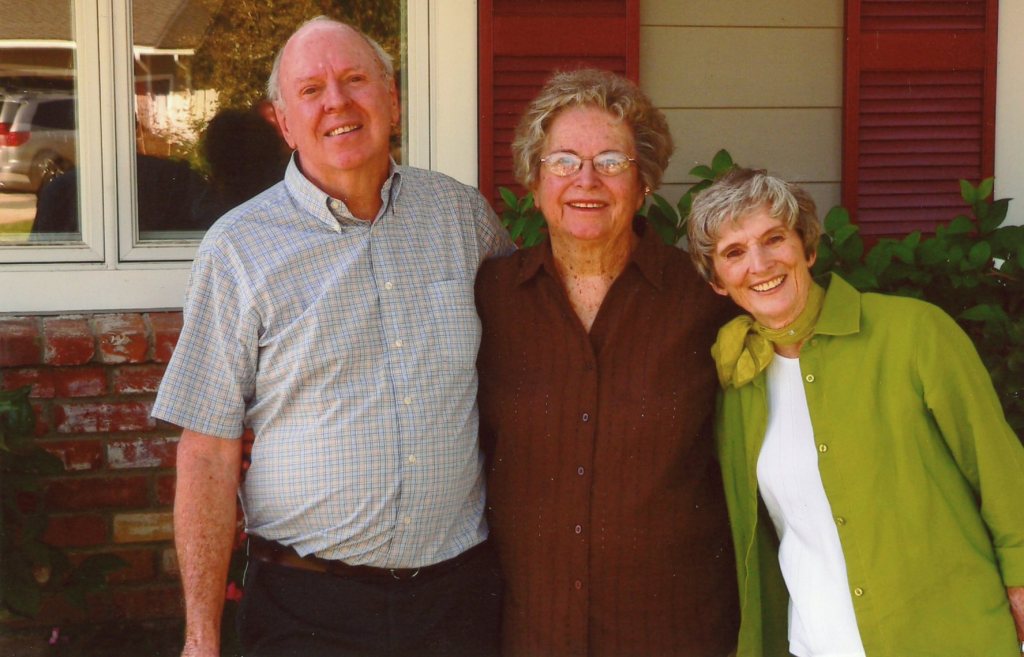
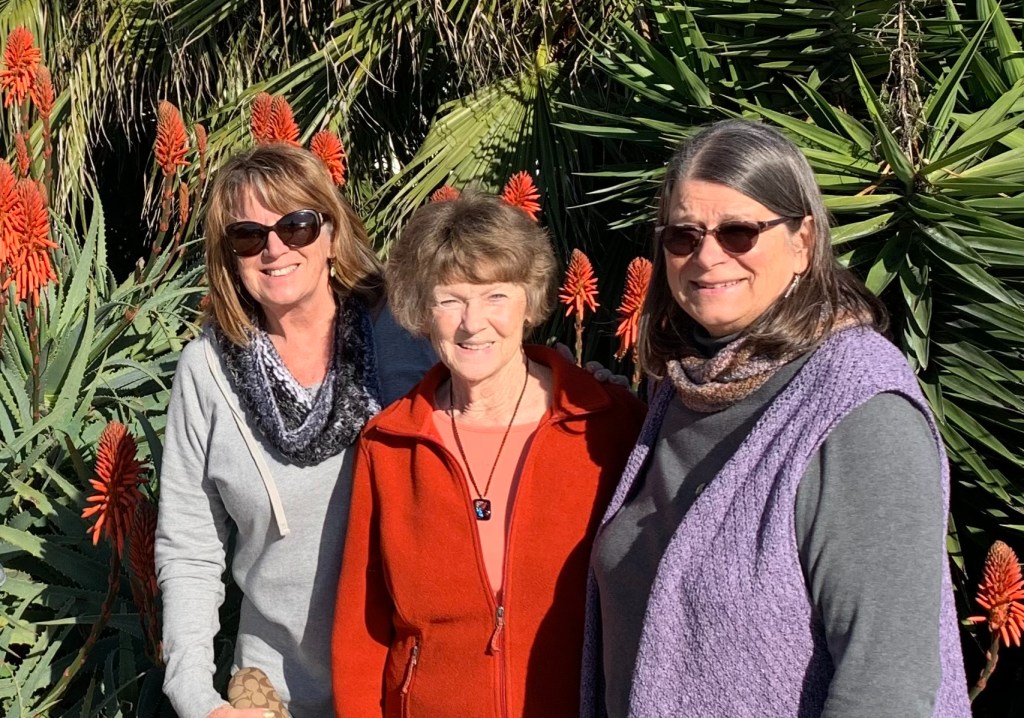
On a beautiful sunny Southern California day in late 2018, my sister Judy and I met Carol in San Clemente for lunch. When she walked up to our table, our jaws dropped. It was like seeing our Aunt Arlene re-appear in the flesh! I will let you see what I mean.

Judy, Carol and Marilee

Aunt Arlene

The three Johnson Sibs

Perhaps you can see the striking resemblance! Their resemblance didn’t stop with body build, facial structure, skin tones, and hair. Carol and Arlene also share a similar personality. Like I said it was uncanny. Ancestry lists their relationship as third cousins once removed, but Judy and I swore they could have been sisters!

The siblings (Don, Marilyn and Arlene) are all gone now. I wish they could have all met Carol, who only lived about 60 miles away from where my mother was born and raised and lived out her life.

That said, I’m fortunate to have Carol as a genealogy buddy. We work together primarily on the Johns(t)on(e) family line. The reason for all of the parenthesis is related to a name change and is the reason that our Johnson line (our mother’s family) had no idea Carol’s line (Johnston) existed.

In the generation of Carol’s and my mom’s great grandfathers, there was a name change for some of the ten offspring of Stephen Johnson and Abigail Cobbey. Our family line remained Johnson. Carol’s family line changed their last name to Johnston. Other brothers changed their name to Johnstone. Some stories that Carol has collected say that Johnston was closer to the original family name. But it also meant that when my mother was researching her great-grandfather (pre-internet and DNA) she never found the Johnston line.

The family first shows up in Ross and Miami Counties in Ohio in the 1830s. Some census forms indicate that Stephen Johnson came from Virginia. Sounds like good information, right? We are here to tell you that there are a lot of Stephen Johnsons in Virginia and Ohio. That very real fact makes for a genealogical nightmare.

Carol and I are still working on getting further back on Stephen’s line, as we have been from the beginning of our relationship. I tend to focus on the story, researching things that fill out the world around our ancestors. Carol does that too, but she’s really a DNA whiz kid, so that’s what she typically revisits first, when we pick up the Johns(t)on search again.

What an incredibly special FIND for my entire family! Now I’m off to research the agricultural schedules for evidence of our farming Johns(t)on(e)s and Carol will revisit all of our DNA matches for new evidence. May the force be with us.

PS: Here’s Carol’s response to my post. Some of the detail can only be appreciated in all of its wonder, if you’re a GERD like we are! (Genealogy NERD)

“Truth be told, your post is SO wonderful and enthusiastic that I really don’t want to get deeply into edits or revisions. However, you sent me off on an interesting goose chase this afternoon, and I will comment on a few things.”

“I’ve been re-reading messages on the Ancestry system which go back to April 2009. It was I who FIRST contacted you on the system on June 24, 2014. At that point (actually, since 1969) I’d known about your great grandfather, but not too much beyond him. Both of our branches had men die young, and that AND geography might have contributed to the lack of branches staying in touch. It was only through my grandfather Sterling Johnston’s correspondence with other branches (Alaska, Utah, etc.) that I had considerable starting material, which didn’t come to me until 1969 (a number of years after my grandfather’s death in 1961). And when I saw your tree on Ancestry, I was sure we were related and we pieced things together after that, each of extending the other’s information!”

“By 2017 we were writing about DNA–and did the Y testing for my nephew and your uncle. That of course has lead us down some rabbit holes.”

“We first met IN PERSON when I took the bus from SF to Petaluma and stayed overnight–October 4-5, 2018. And YES, on December 28, 2018, there was the wonderful lunch in San Clemente with Judy joining us!!”

“Johnstone was reportedly the original family name and has been used exclusively by the Alaskan branch FOREVER. That’s where Jenny fits in (and I was first in touch with HER in 1970 though I didn’t meet her until my first trip to Alaska in 2011, and on other trips since then).”

“Bottom line–you are the FIND in my genealogy world! It seems ironic that you are a few years younger, but a generation removed!”

And that my folks is what genealogy is all about.

Foundations

The genealogist Amy Johnson Crow has invited her blog followers to join her in 2022 for “The 52 Ancestors in 52 Weeks” challenge. It’s a low-stress opportunity to make something from all of the research we do in genealogy. For me that research tends to accumulate in binders, boxes of papers, in computer files and amongst the flotsam and jetsam of my genealogy world. I actually started this Following the Trails blog to share what I’ve learned, but, if it isn’t obvious by now, I need a prompt to keep it up. So, for better or worse, I’m trying Amy’s challenge as a way to share the stories I’ve accumulated over the years.

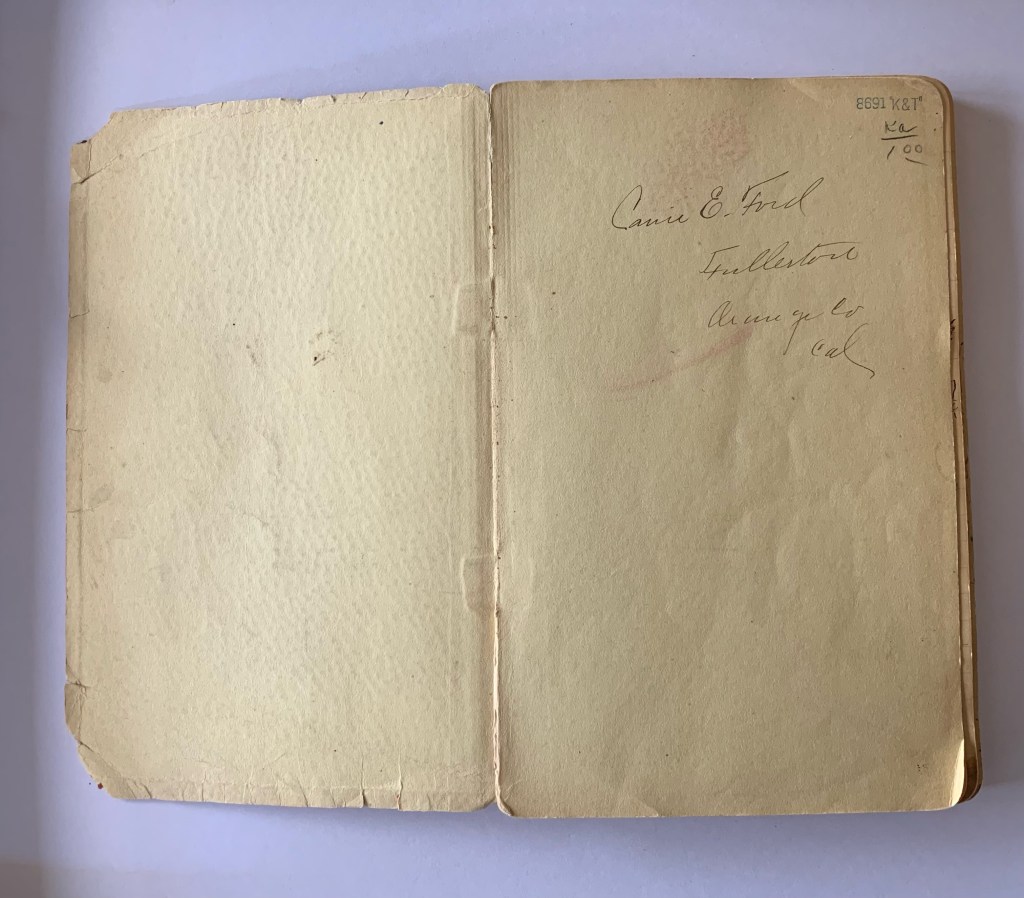
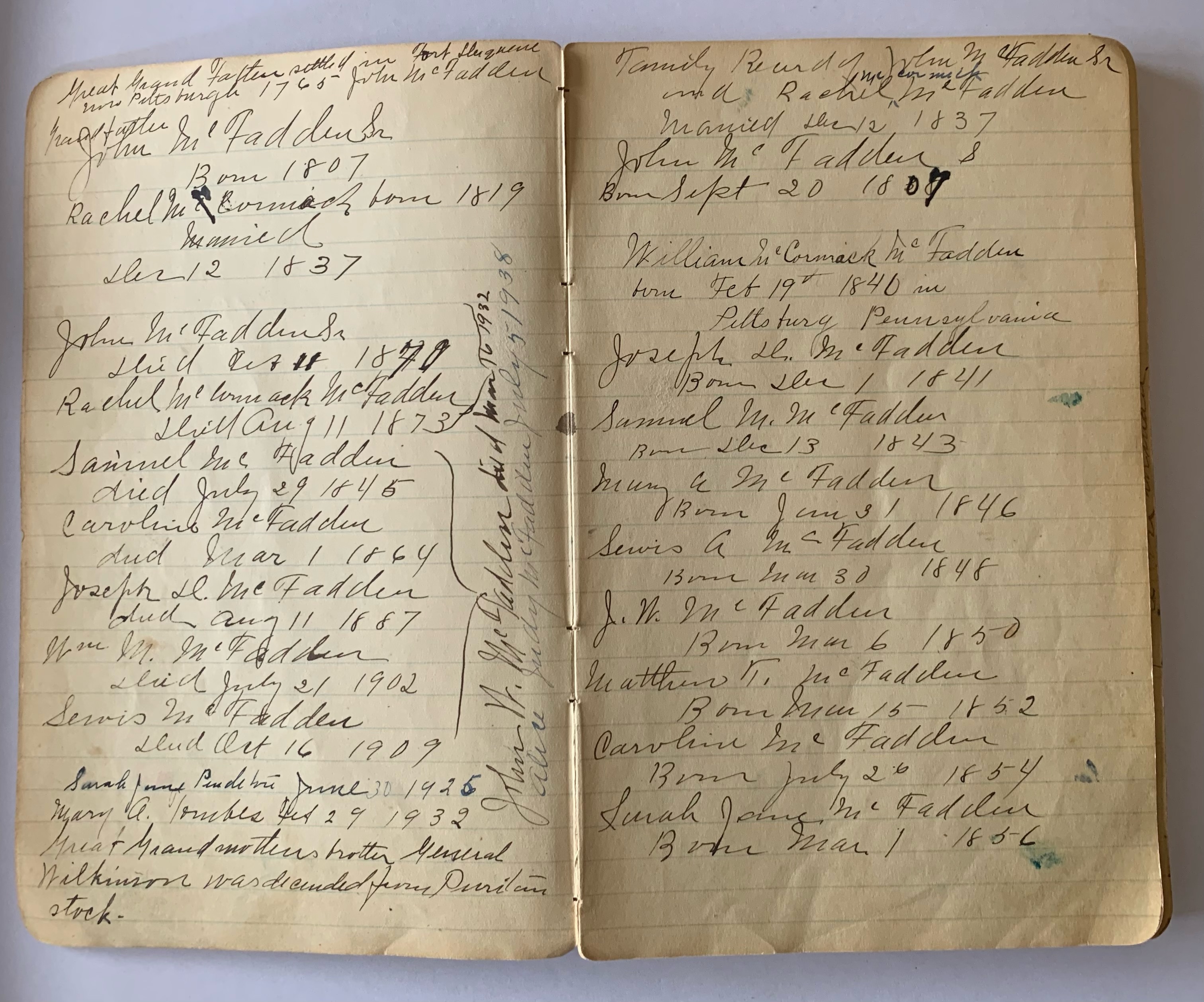
The subject of the first week is FOUNDATIONS. My immediate reaction is to think of this little book with information compiled by my great grandmother Carrie McFadden Ford. The book consists of the types of information you’d typically find in a family bible. Births, marriages and death dates along with snippets here and there of where these ancestors lived and for how long and how they got to where they ended up. GOLD for a genealogist!

Various people in the family have perused this book, looking for information. I can see notes in handwriting I recognize, like my mother Marilyn Ford, but most of it is written by Carrie herself. The last identifiable entry from her is for an event in 1949. Given the state of her handwriting at the time the entry was written, I’m thinking she wrote it closer to her death in 1961.

No doubt part of the information was compiled to qualify her for membership in the DAR (she was a charter member of the Mojave Chapter). But that’s another rabbit hole for me to go down another day.

As an aside, Carrie was described as “one of Fullerton’s most philanthropic residents.” A full description of her history, her numerous activities and accomplishments can be found in the Fullerton Heritage (Spring, Volume 17, No.2, May 2011). How she managed to do all that, raise four boys on her own, as well as become the matriarch of the family after her parent’s death…well let’s just say, I’m in awe.

Carrie was understandably proud of her heritage, which she traced back to the earliest days of European settlements in the continental US. She researched four primary family lines. What follows are a few of the pages she wrote.

The McCormack family, most often spelled McCormick. Rachel married John McFadden, Carrie’s grandfather.

The McFadden family. Carrie’s father was William McCormick McFadden, one of the earliest settlers in what became Orange County.

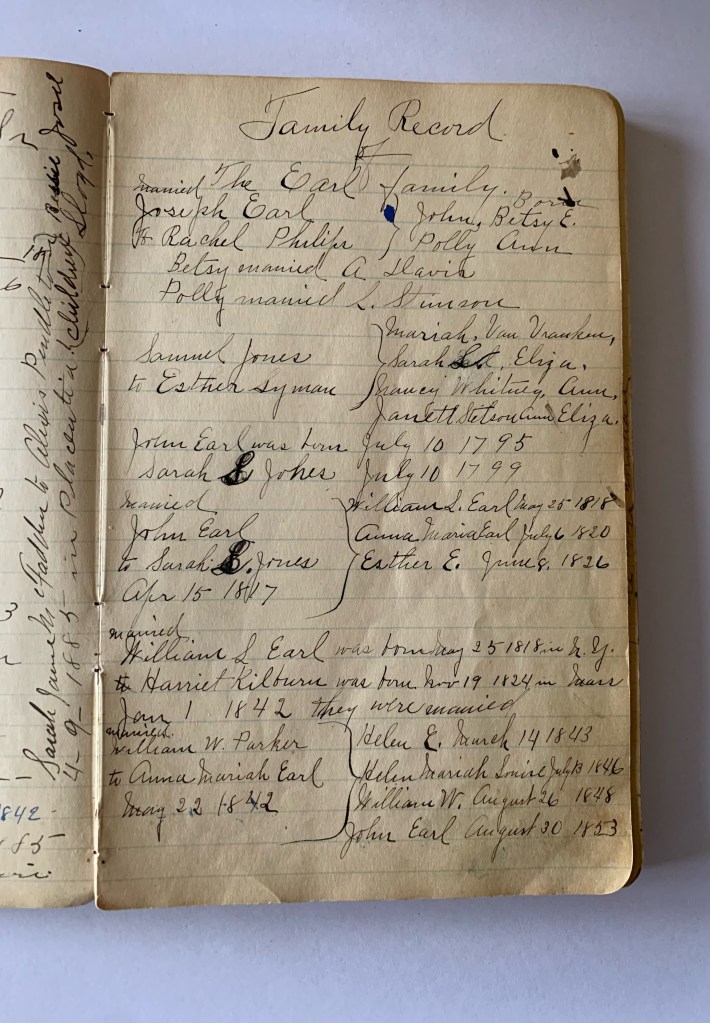
The Earl family. Carrie’s mother was Sarah Jane Earl. The Earl family was the line Carrie used to trace her ancestors back to the Revolutionary War (Phineas Fairbanks), to qualify for DAR.

And last but not least, she researched the Ford family. She was also able to trace this family line back to the early days of the Republic. Originally my sisters and I thought this was her DAR qualifier (Benoni Ford), but since it was her husband’s family, it could not be a direct line. My sister Judy and I discovered this when we visited the New England Historical Genealogical Society in 2019.

So yes, FOUNDATIONS. I’m blessed with a firm foundation on which to build my genealogy research. Thank you Carrie!